THE ONE WHO STANDS IN THE CENTER OF THE FIRE
•
THE ONE WHO STANDS IN THE CENTER OF THE FIRE •
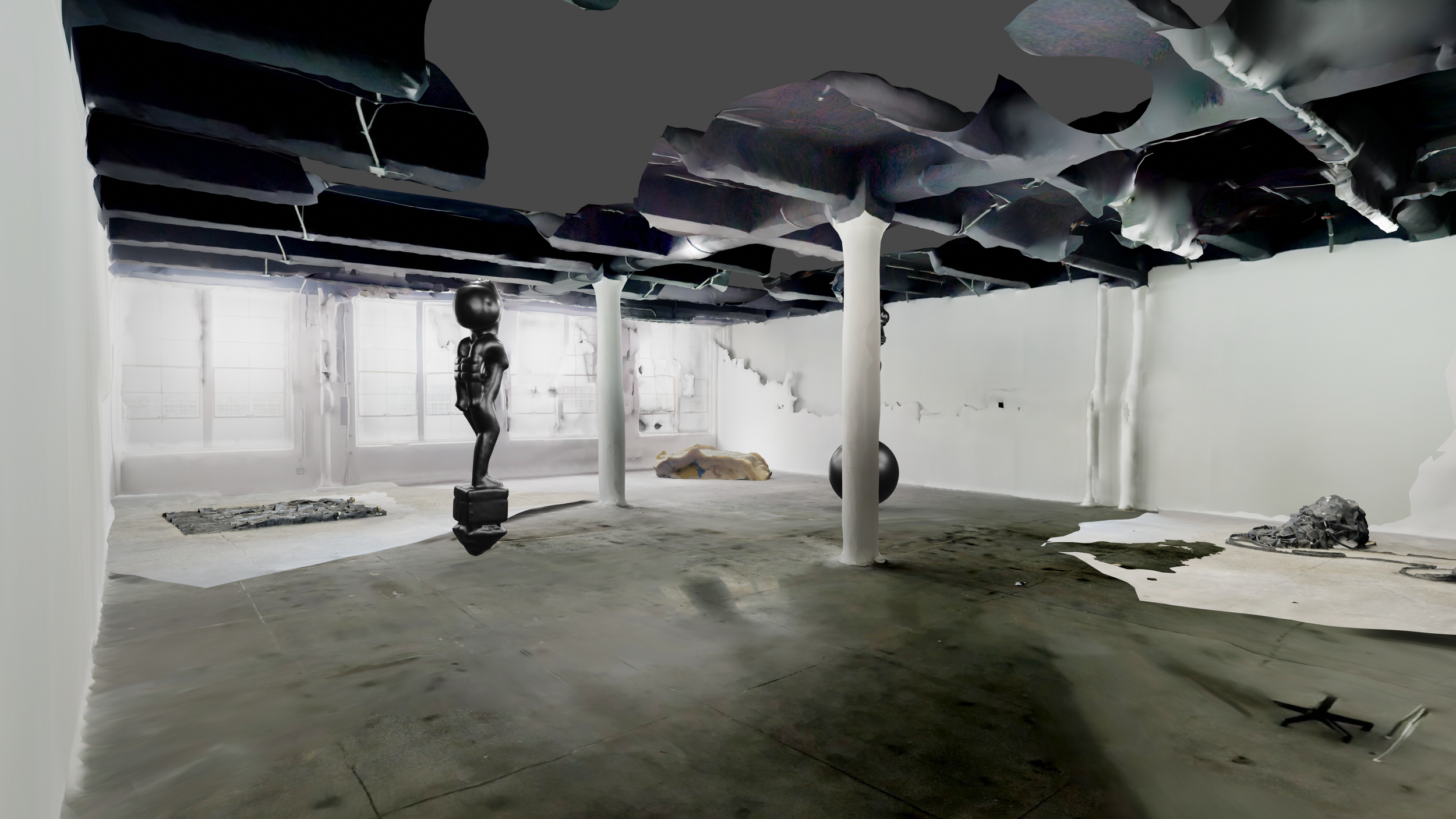
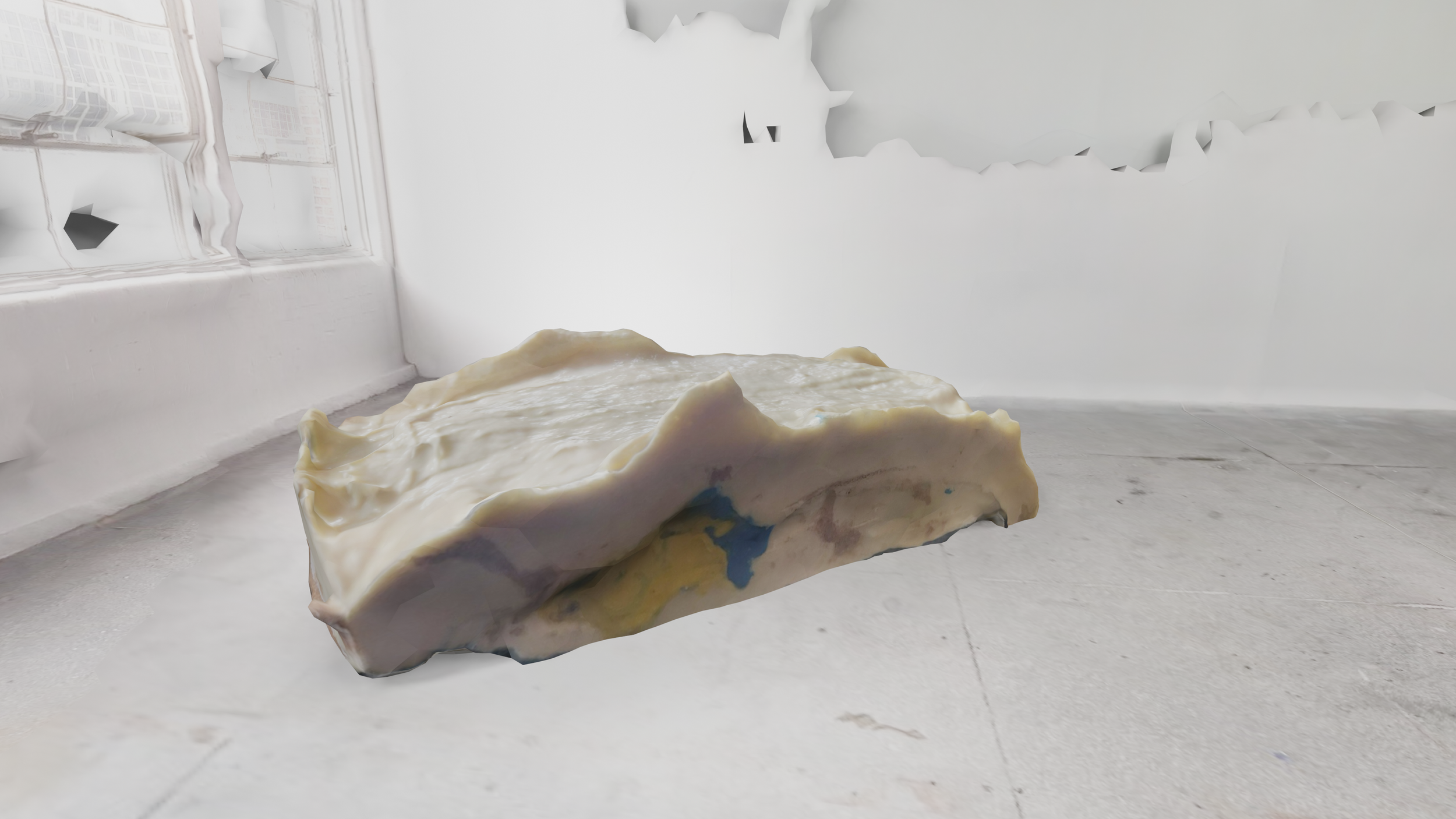
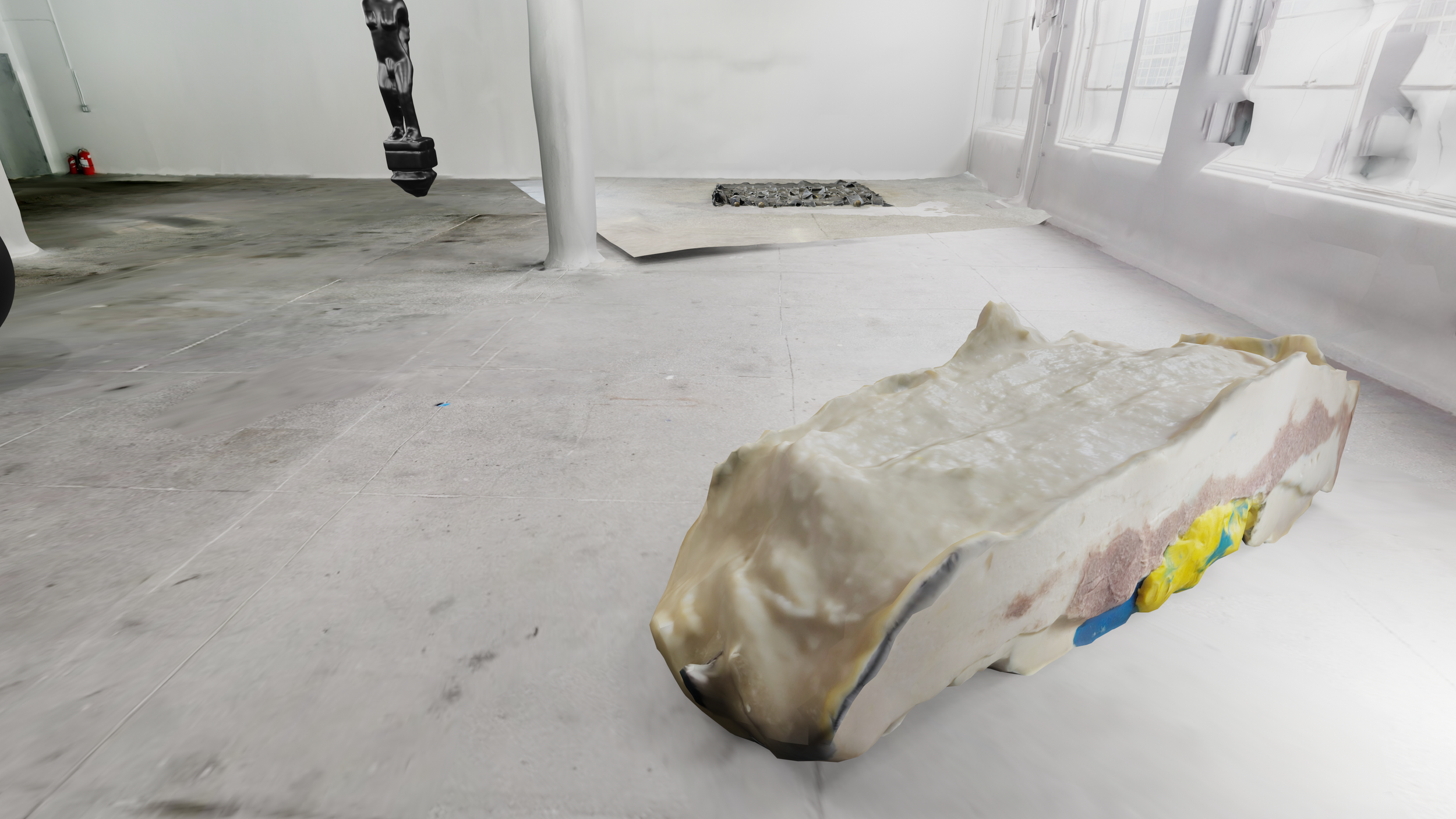
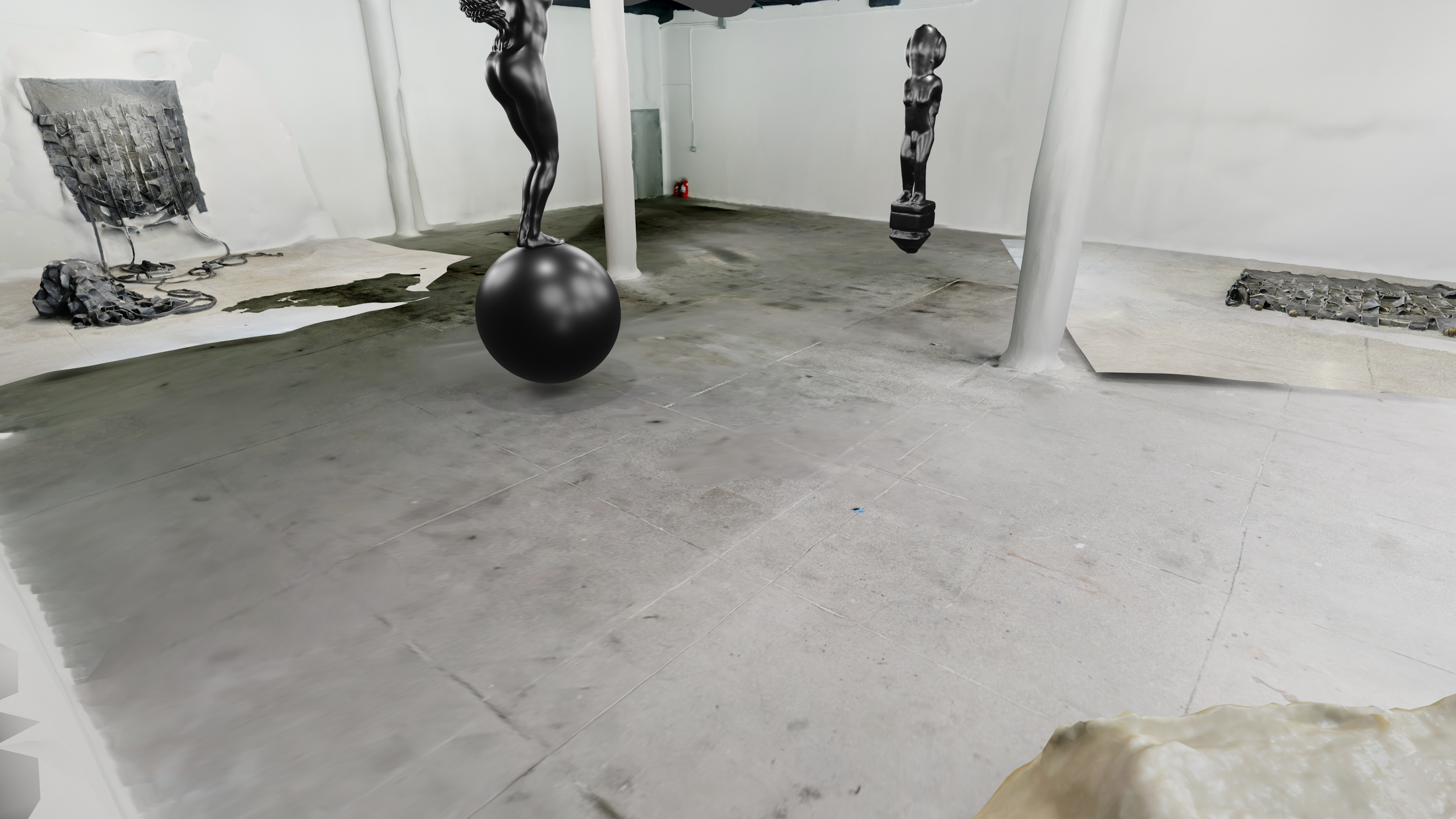
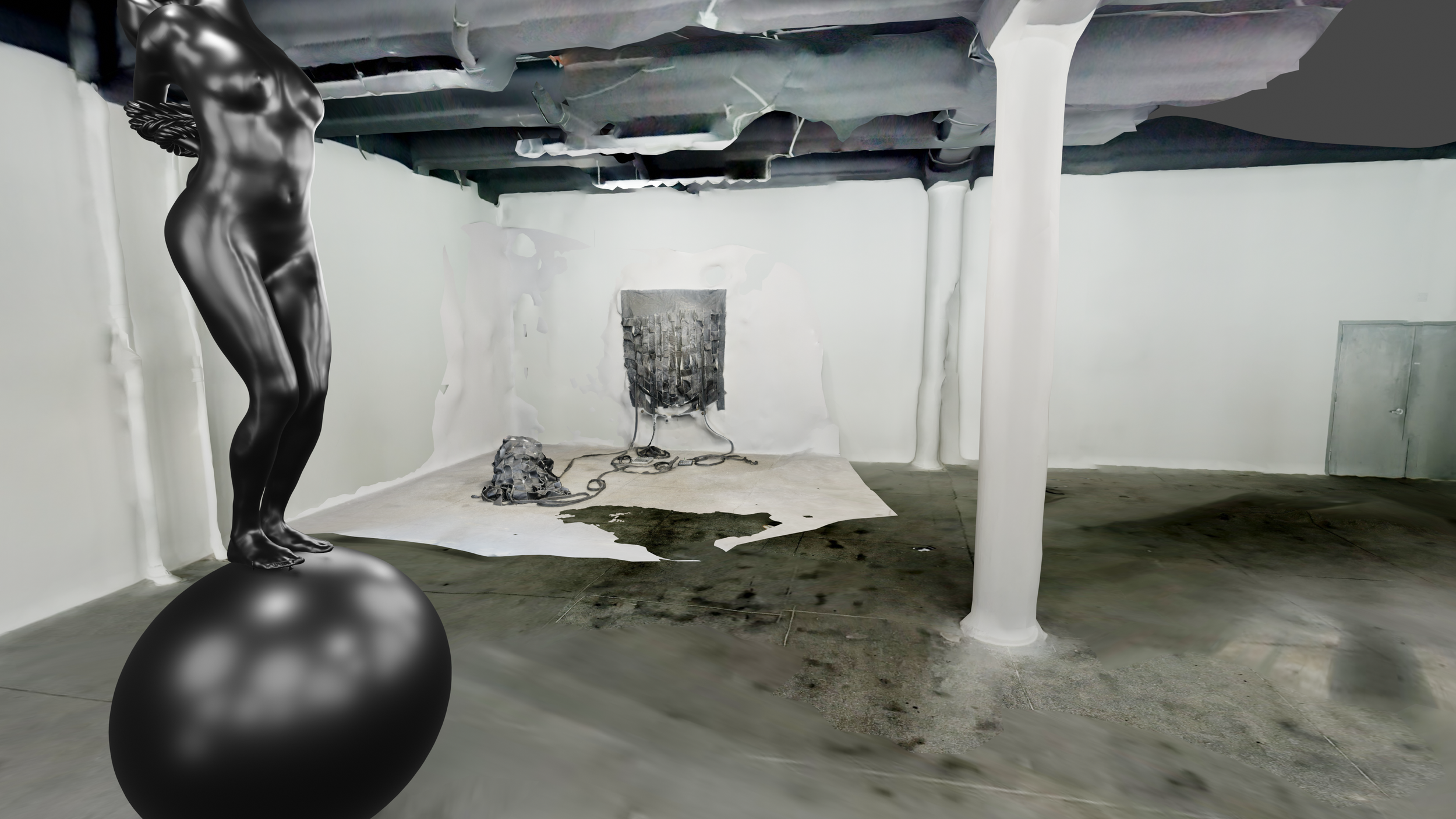
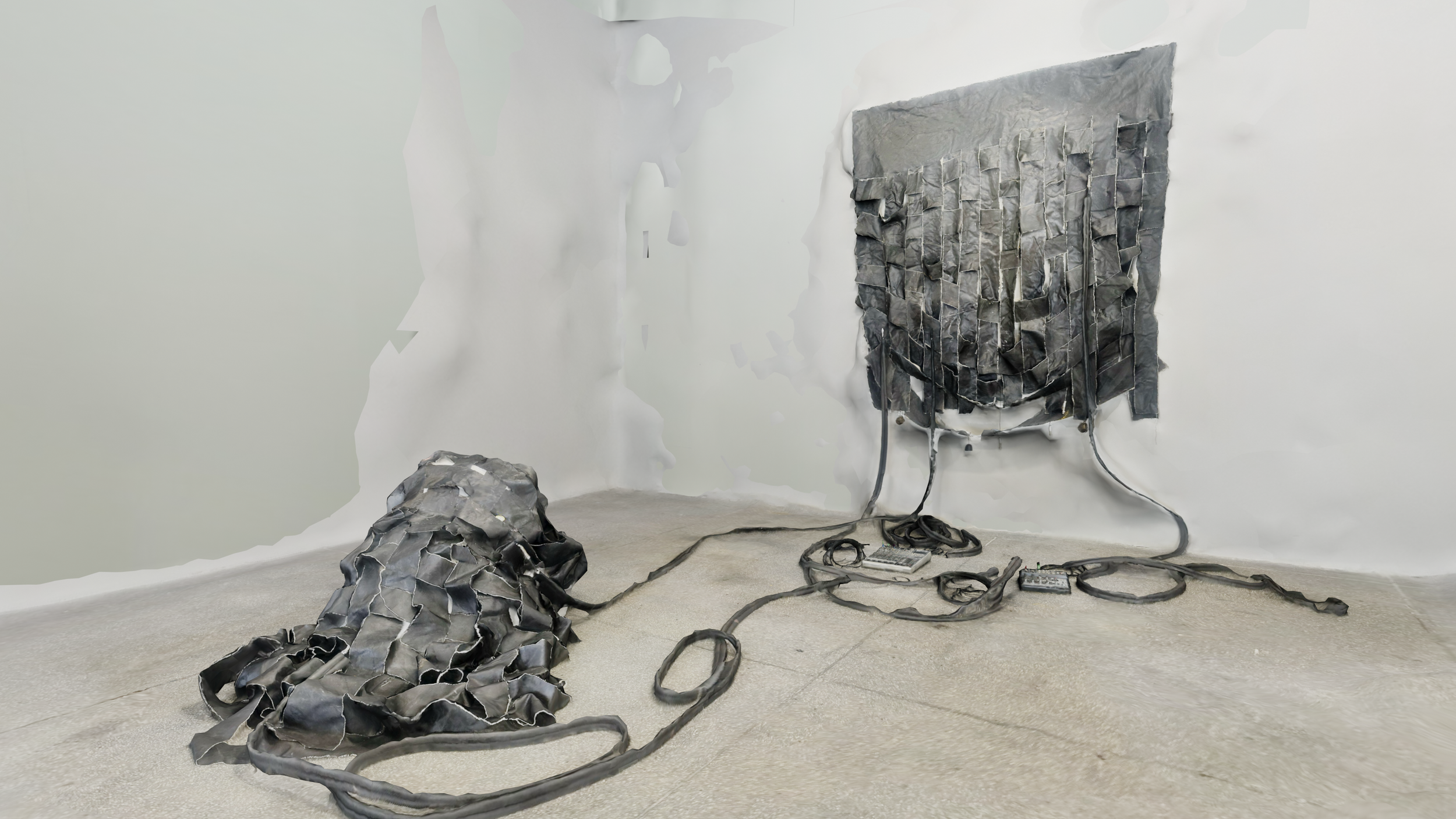
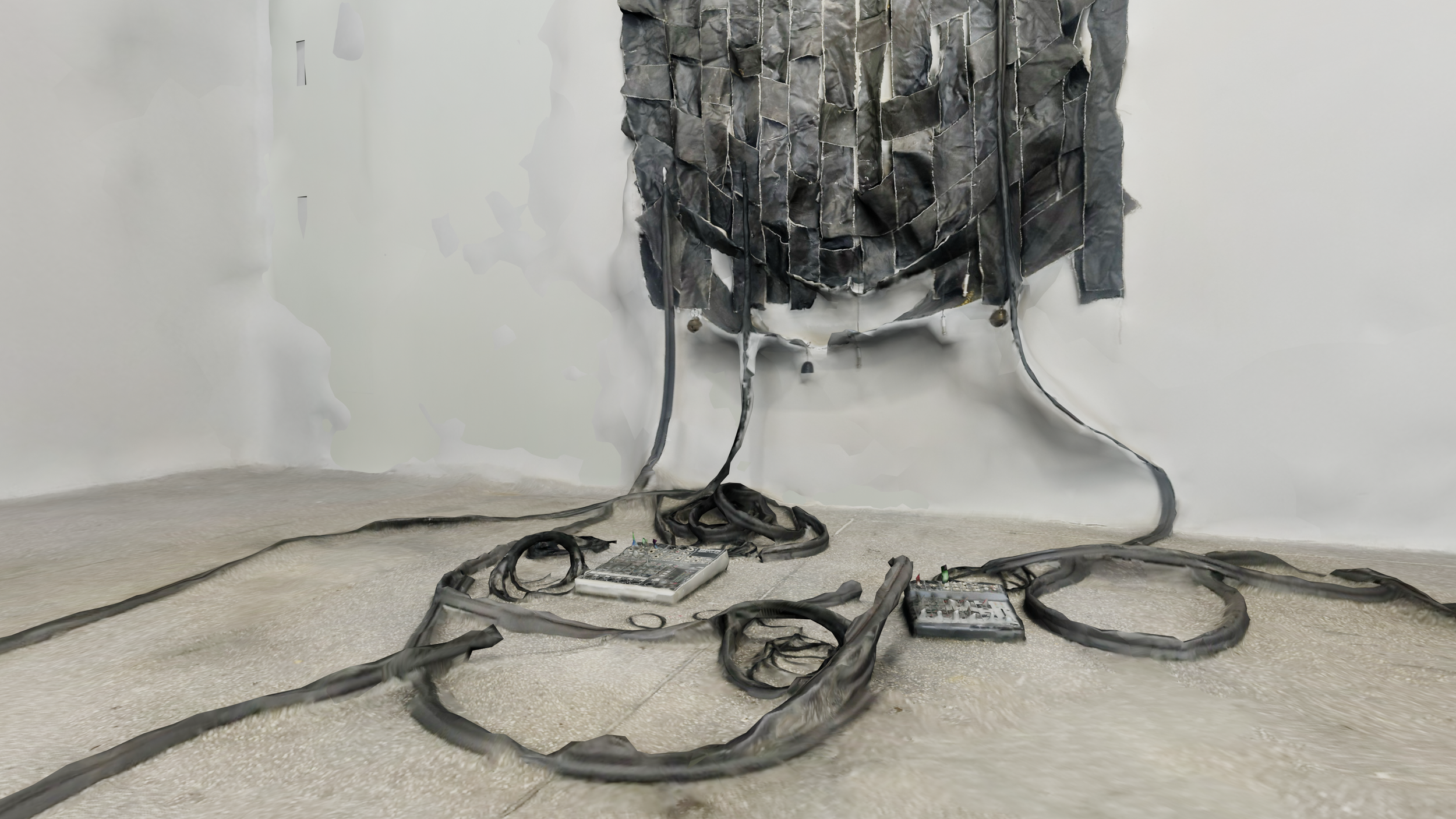
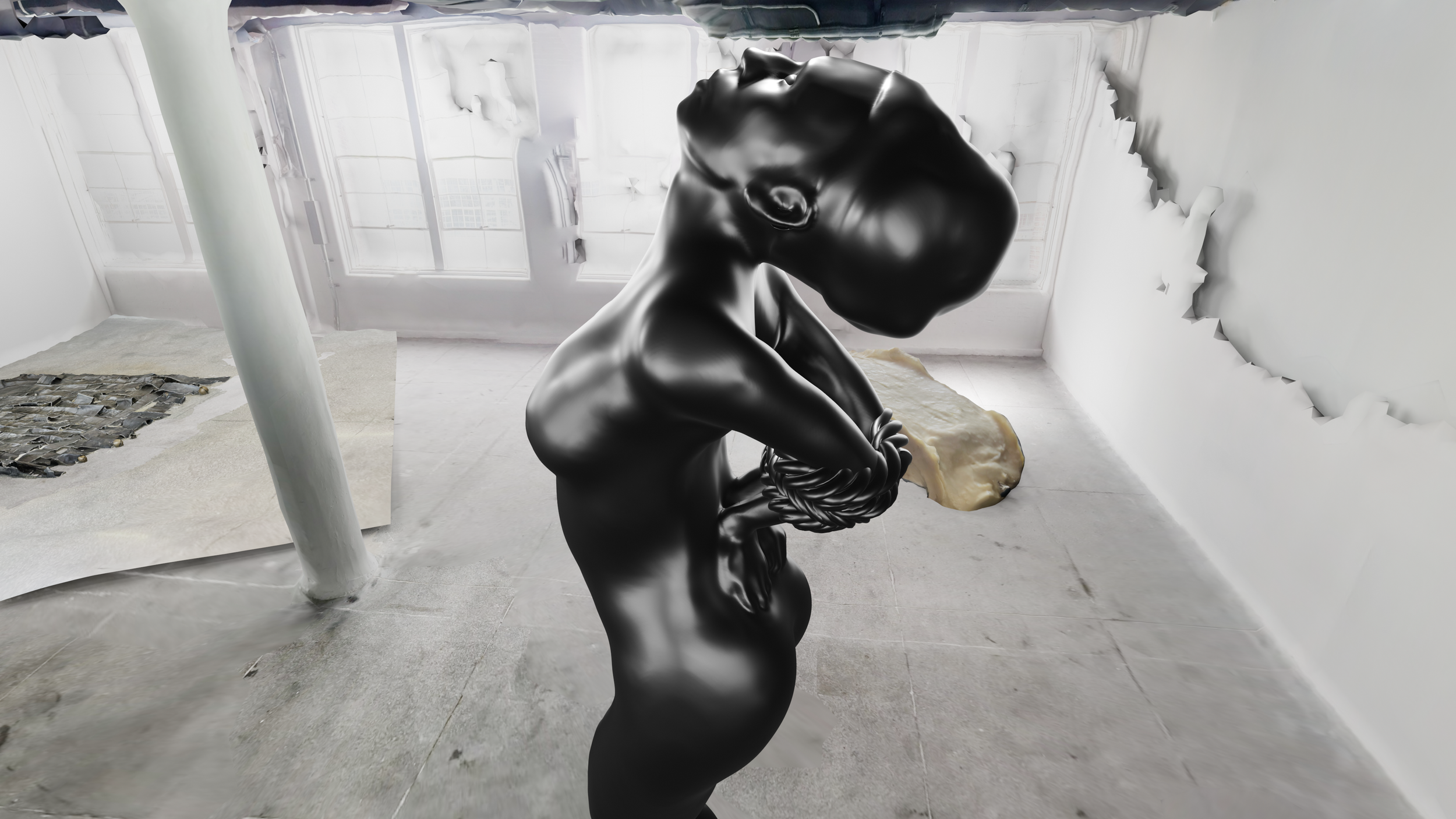
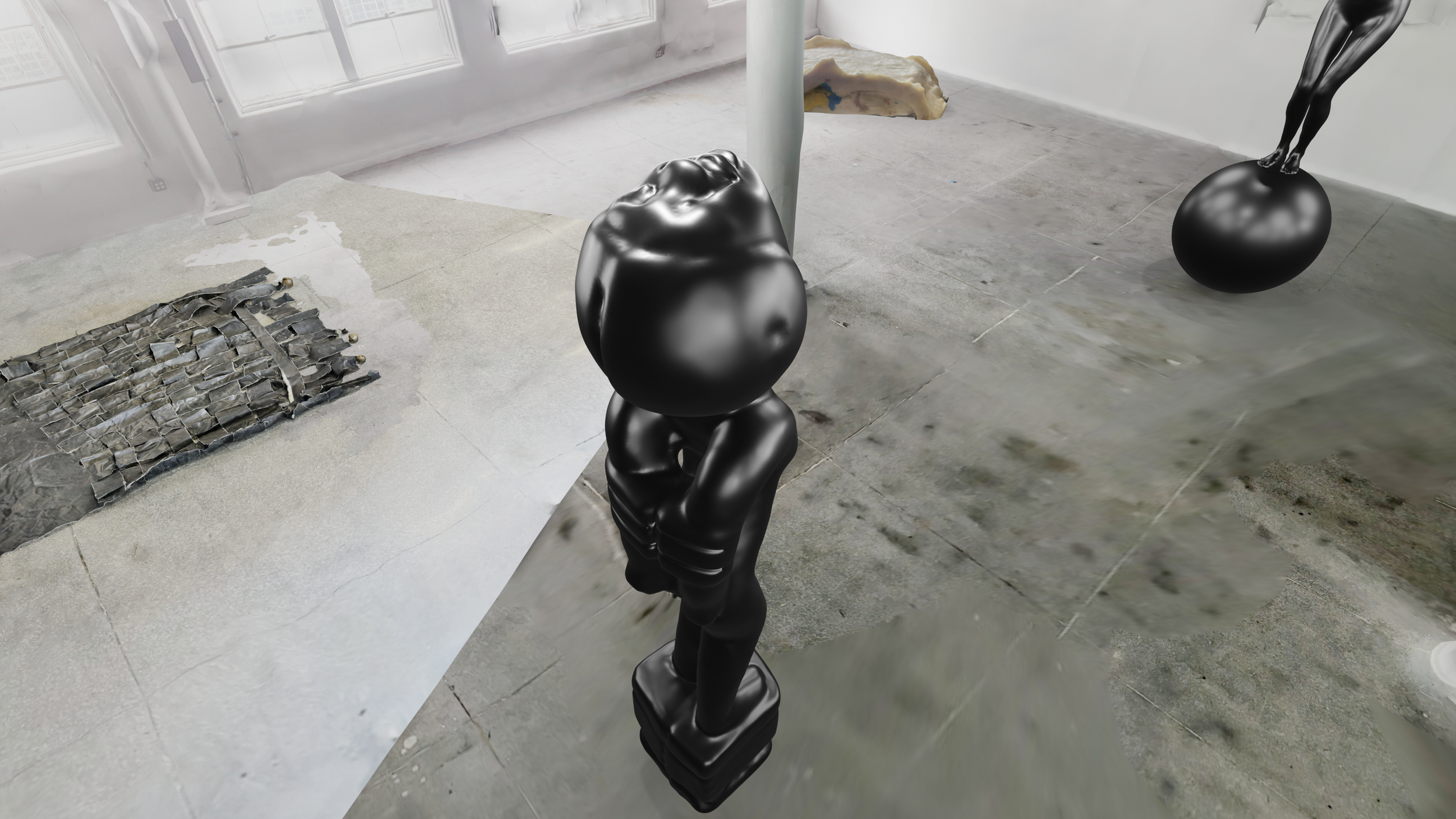
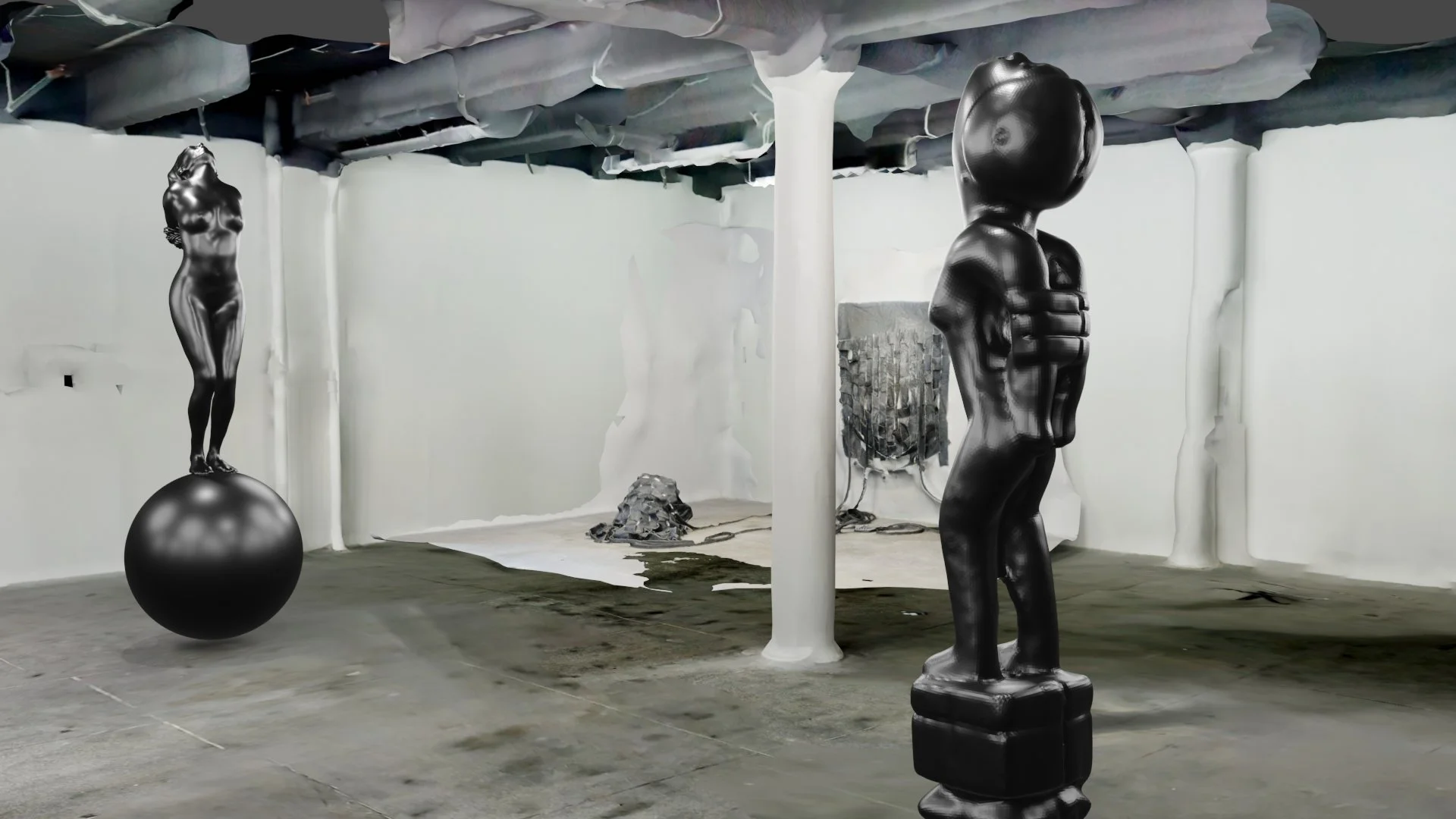
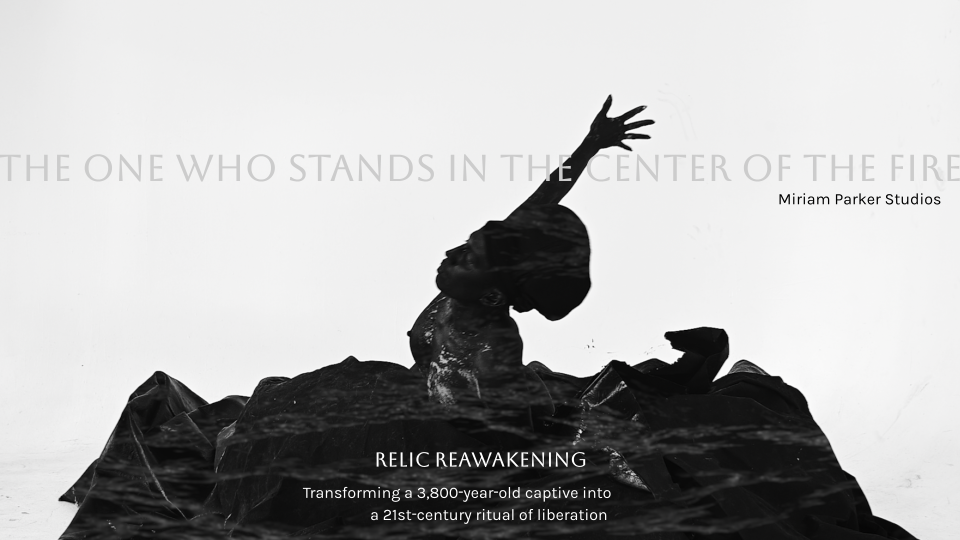
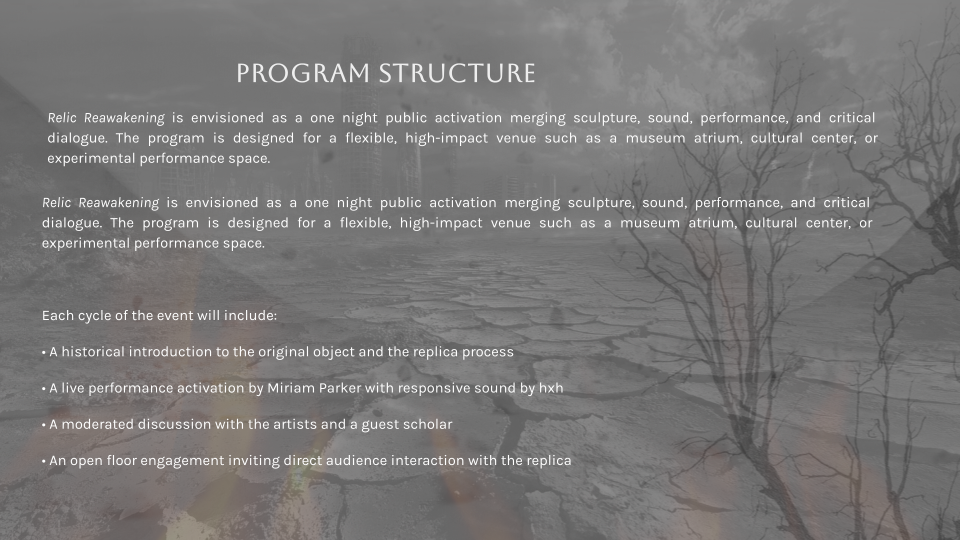
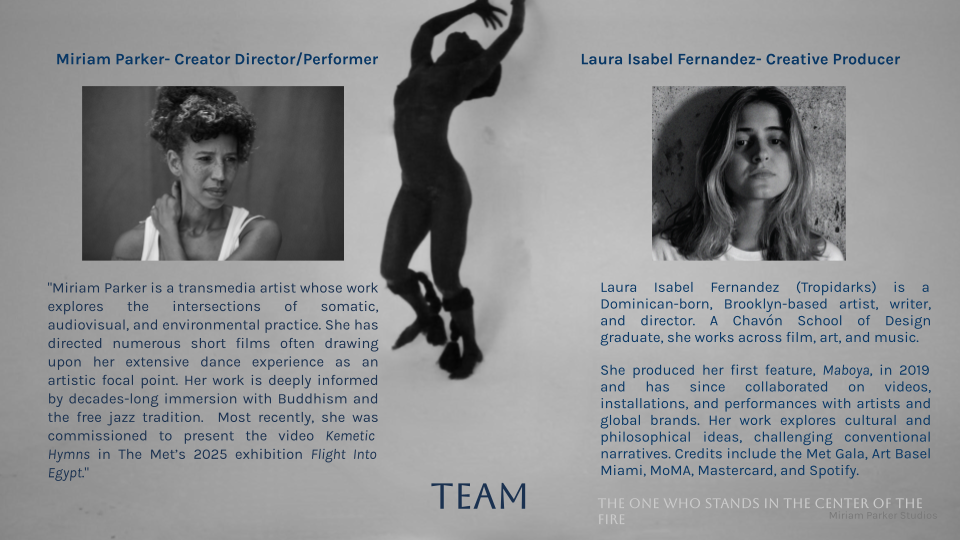
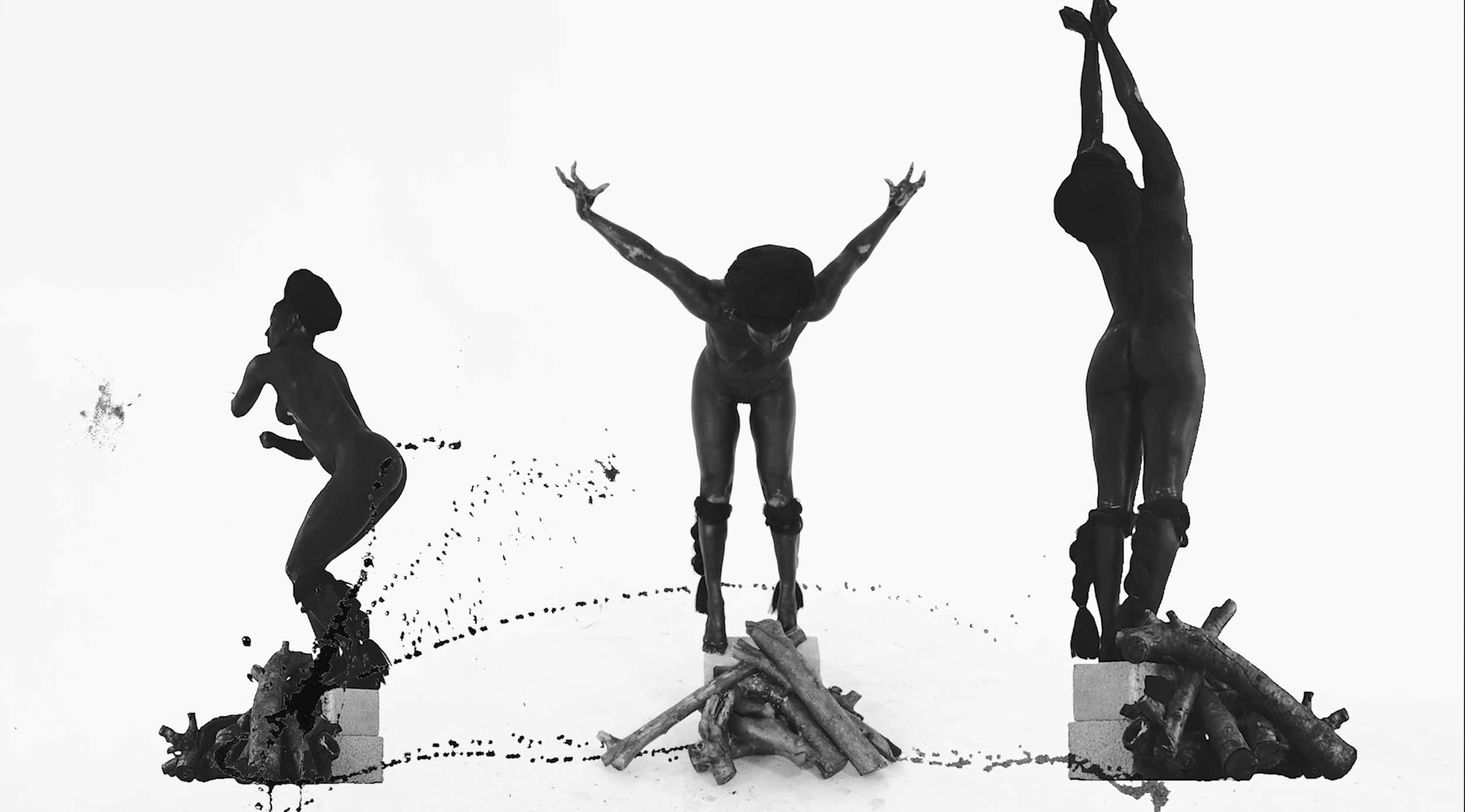
The One Who Stands in the Center of the Fire is a multi-component artistic project unfolding across film, performance, installation, and sound.
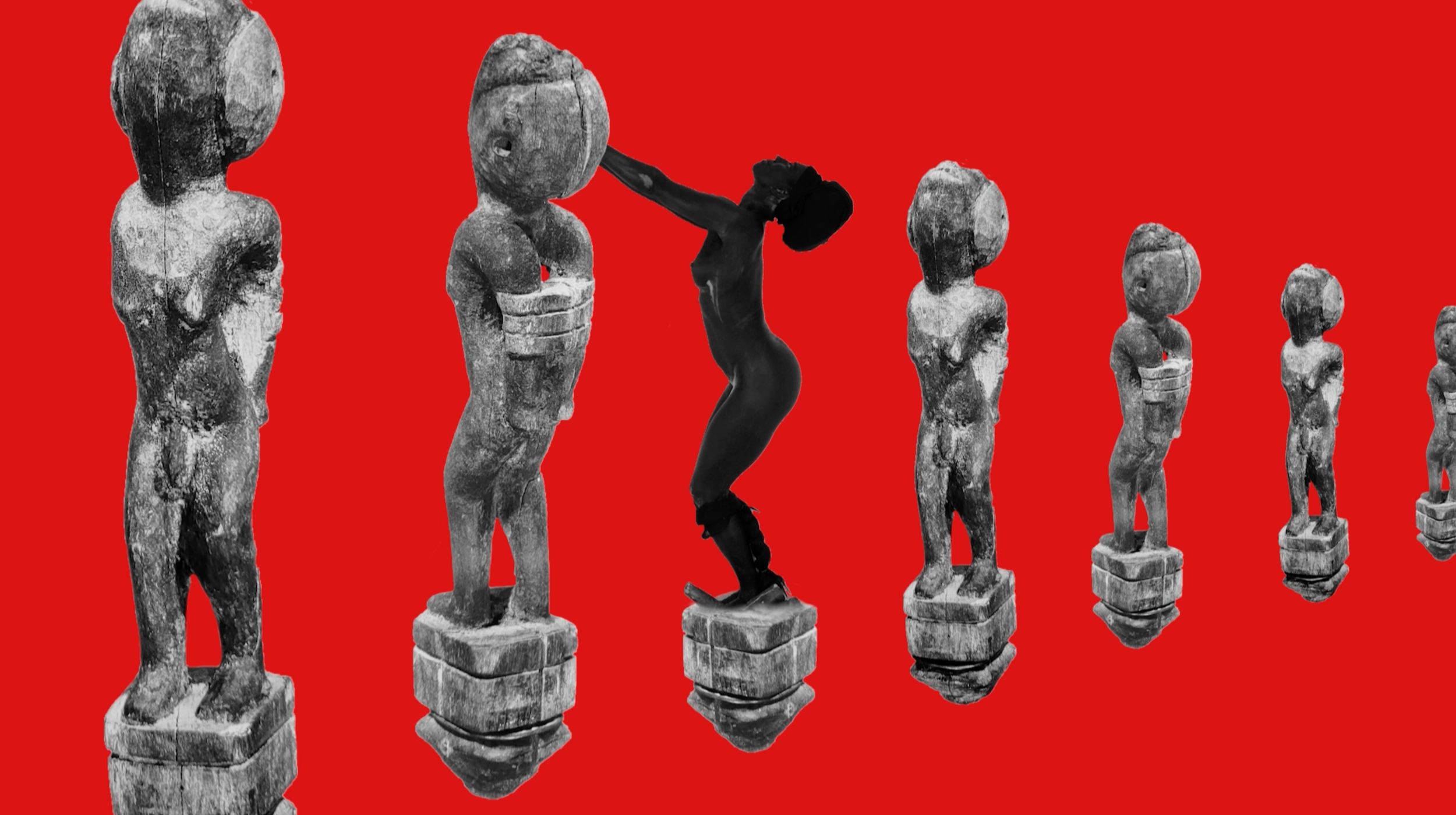
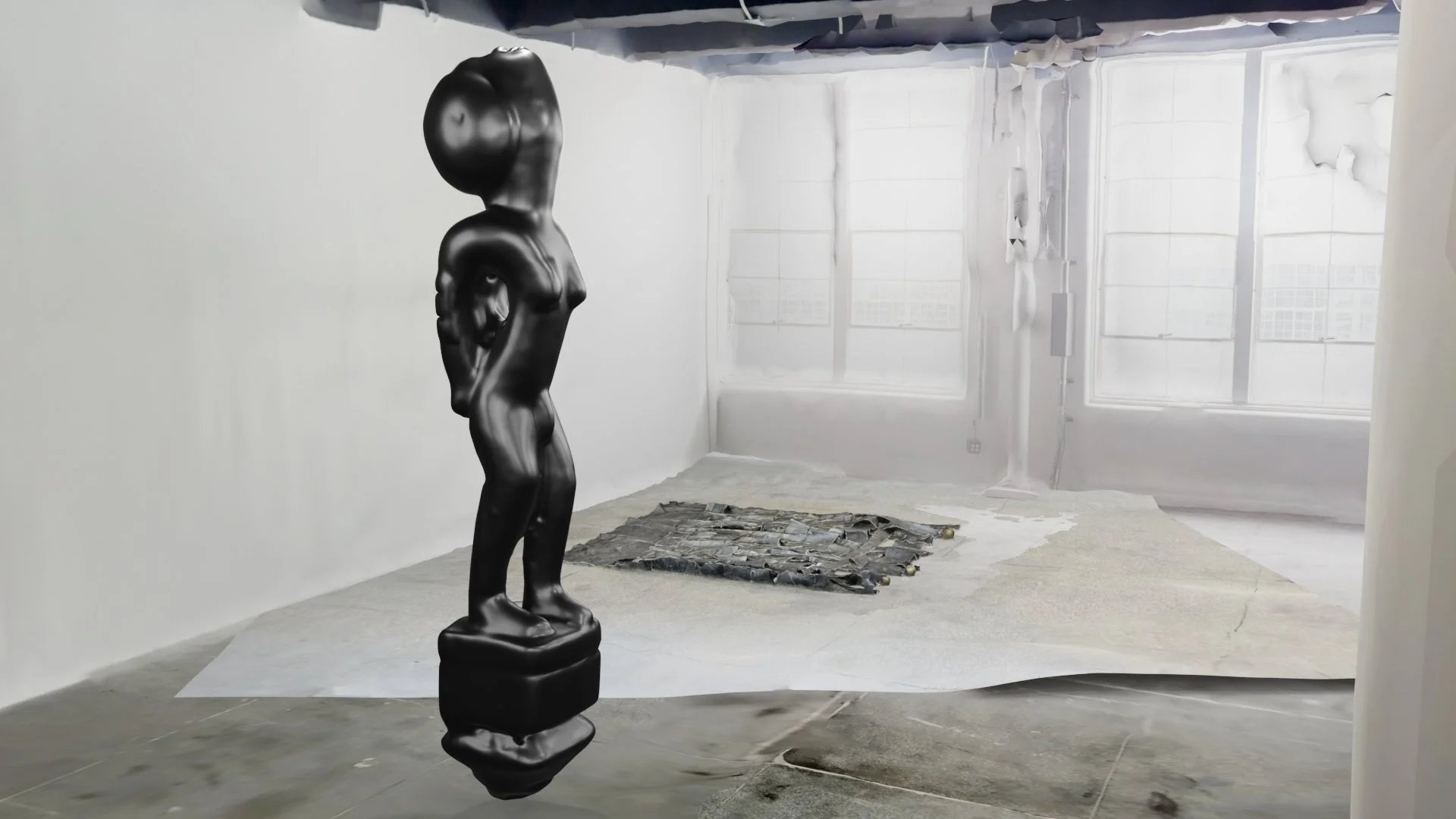
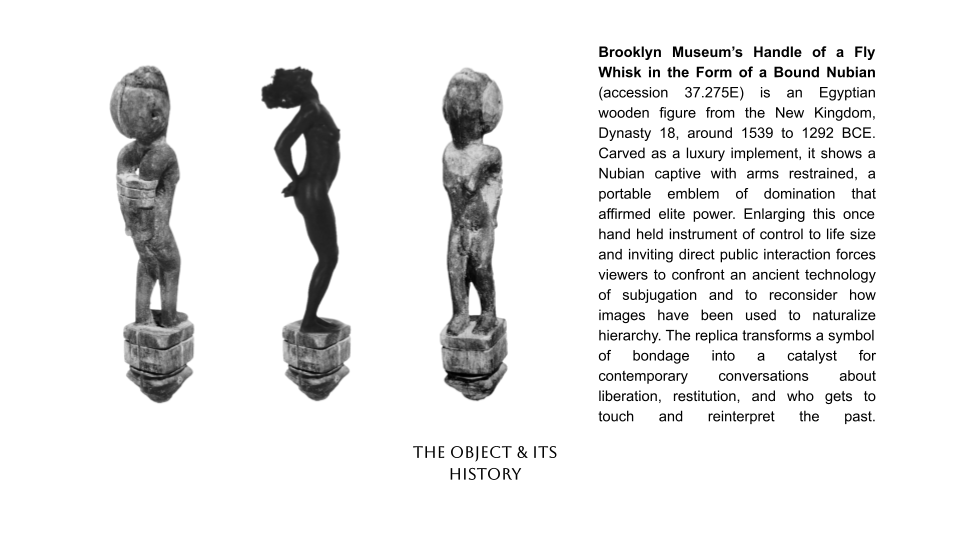
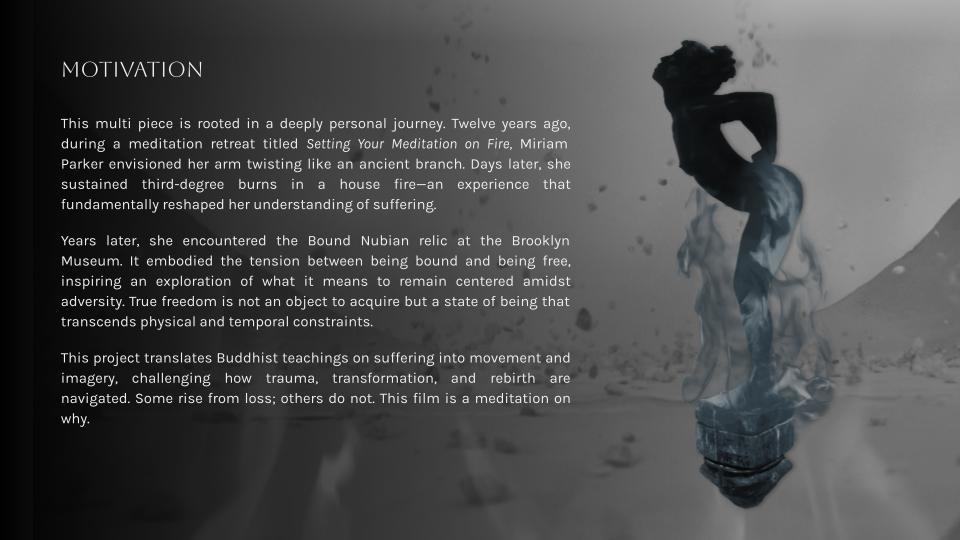
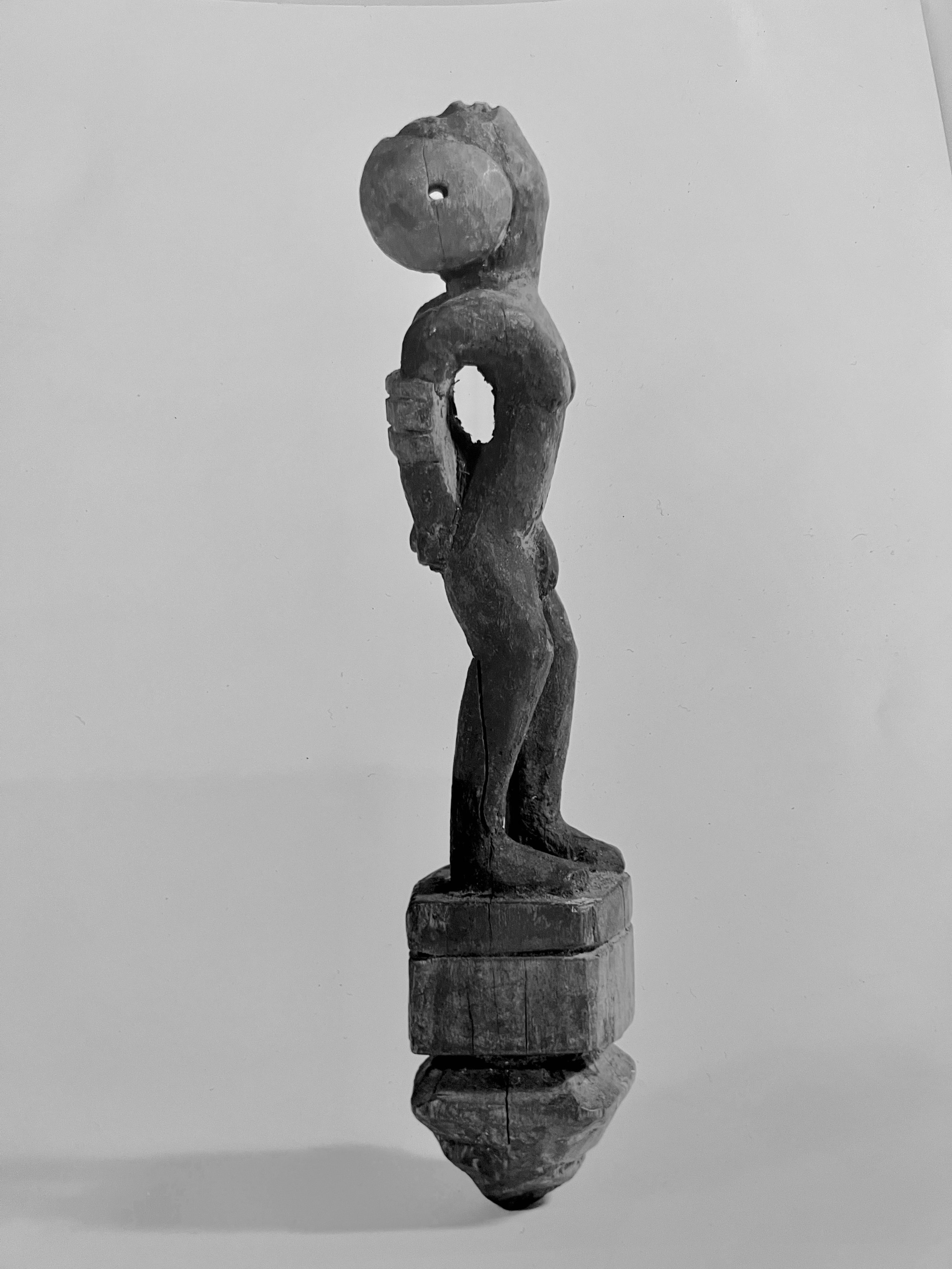
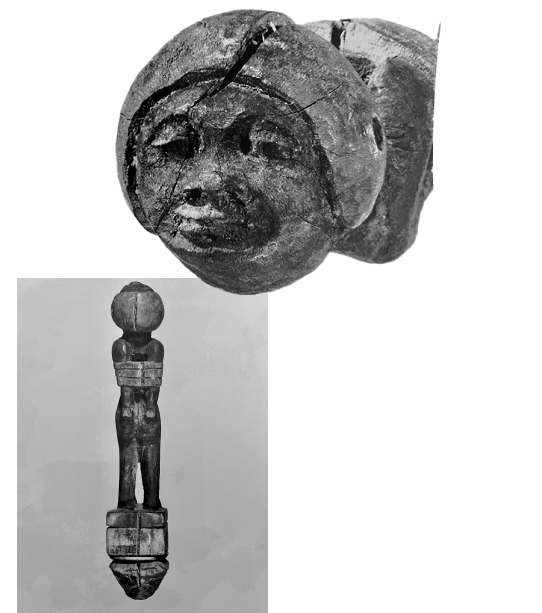
It originated from an encounter with an ancient Egyptian relic—the image of a bound Nubian figure carved into a New Kingdom fly-whisk handle (c. 1539–1292 BCE)—and has since grown into a living system that examines freedom, constraint, vitality, and presence across historical and contemporary contexts.
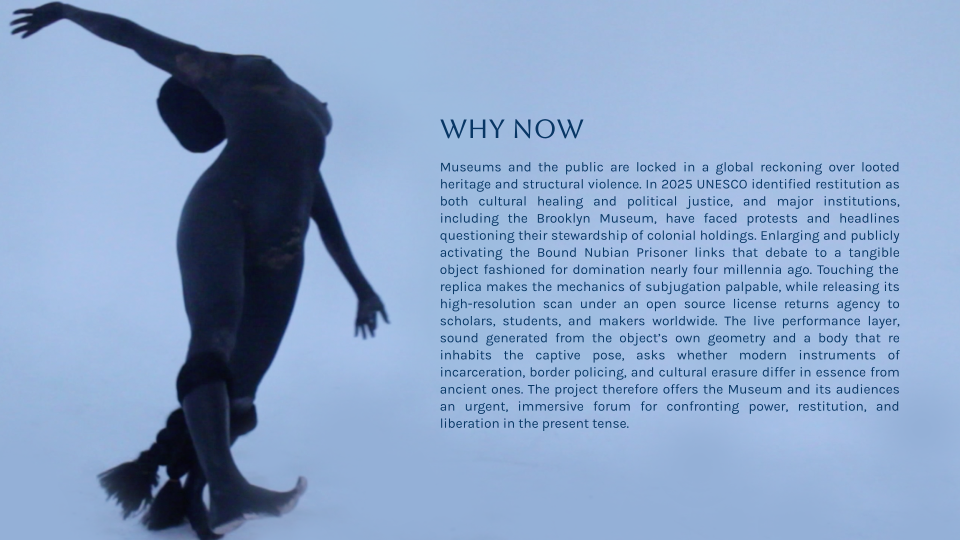
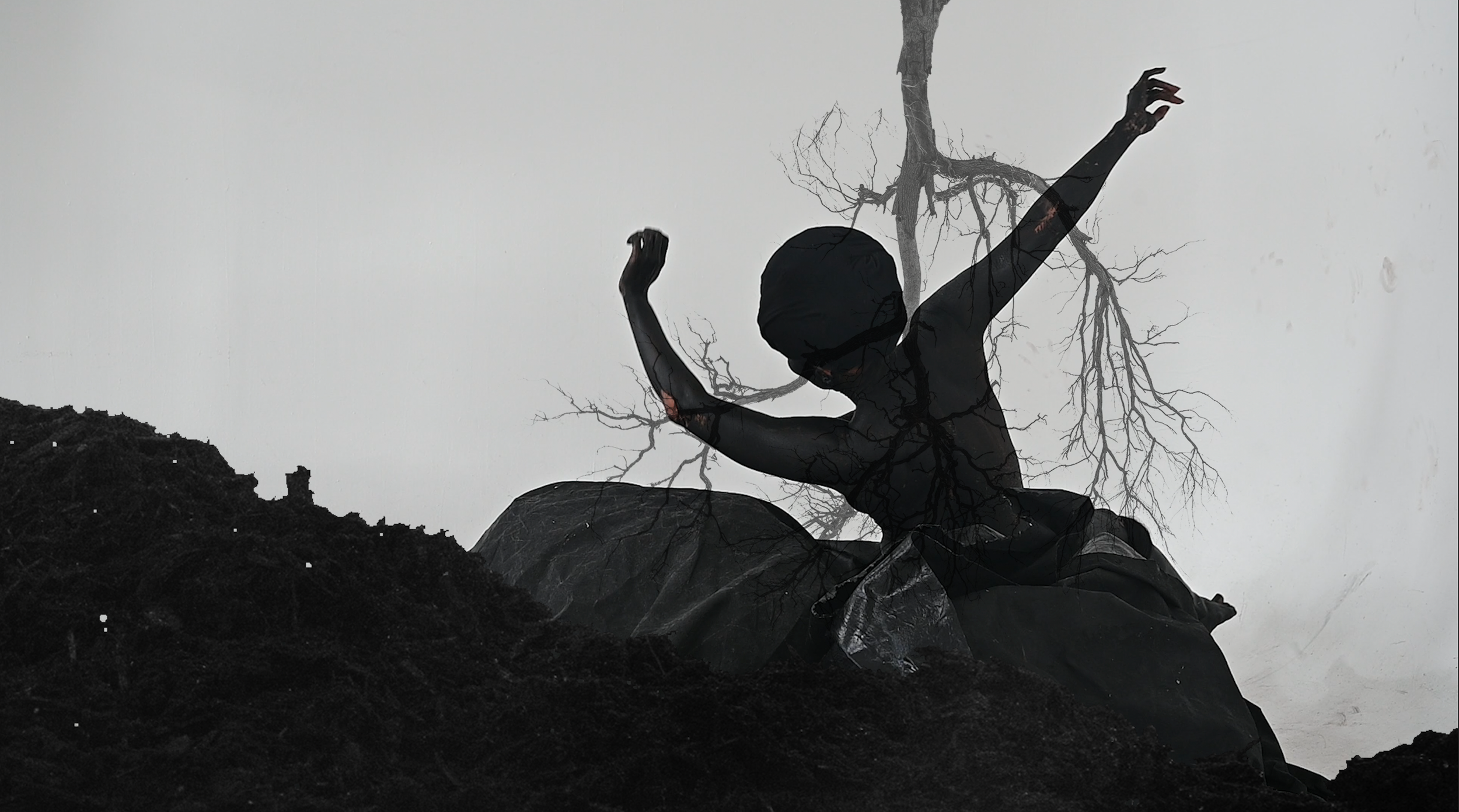
The project does not present freedom as an elsewhere to be reached, escaped to, or transcended toward. Instead, it investigates freedom as something located—practiced within constraint, gravity, history, and the conditions one cannot leave. Across its forms, the work asks how one remains present inside pressure rather than fleeing it, and how attention, orientation, and relational negotiation can subtly alter what feels fixed or inevitable.
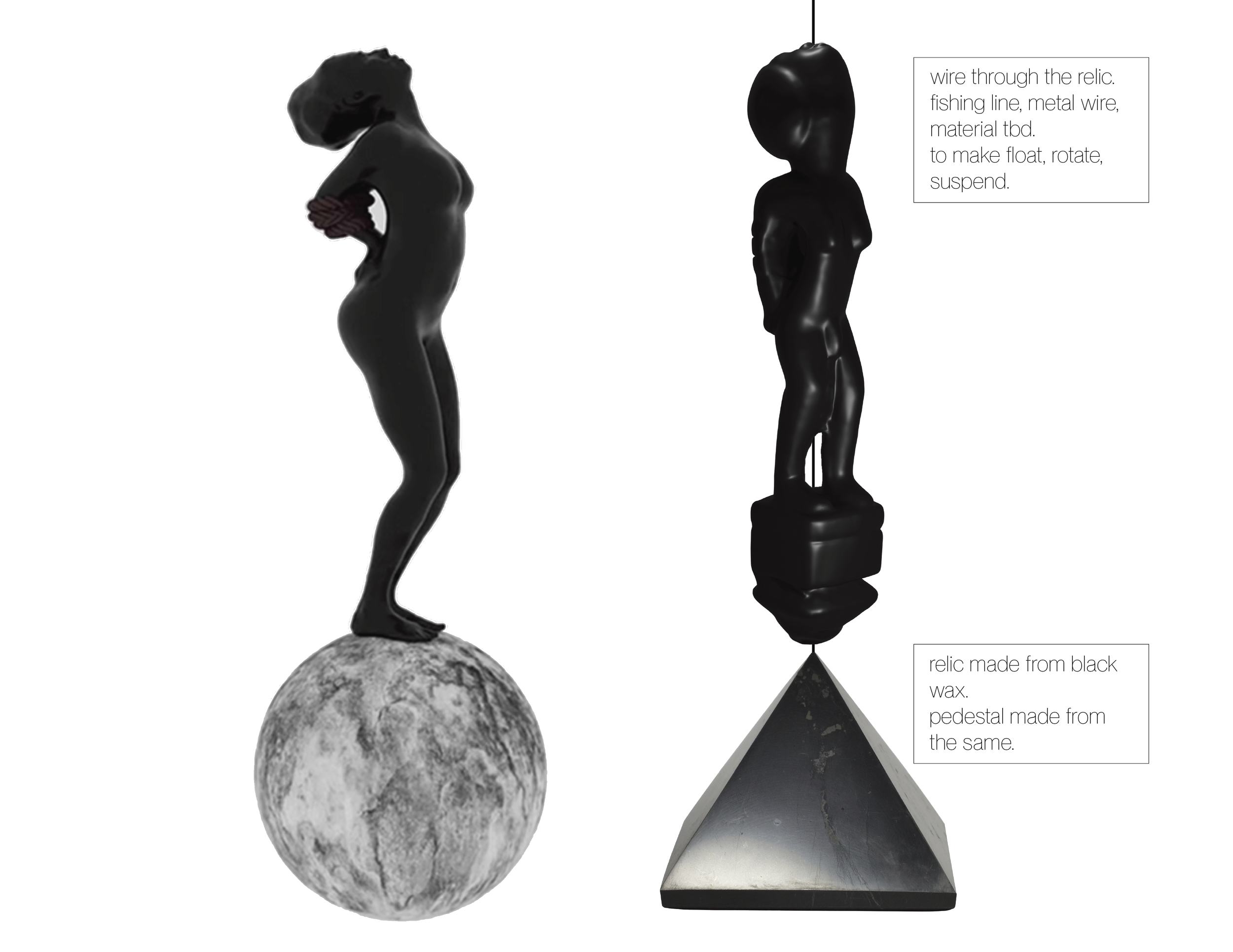
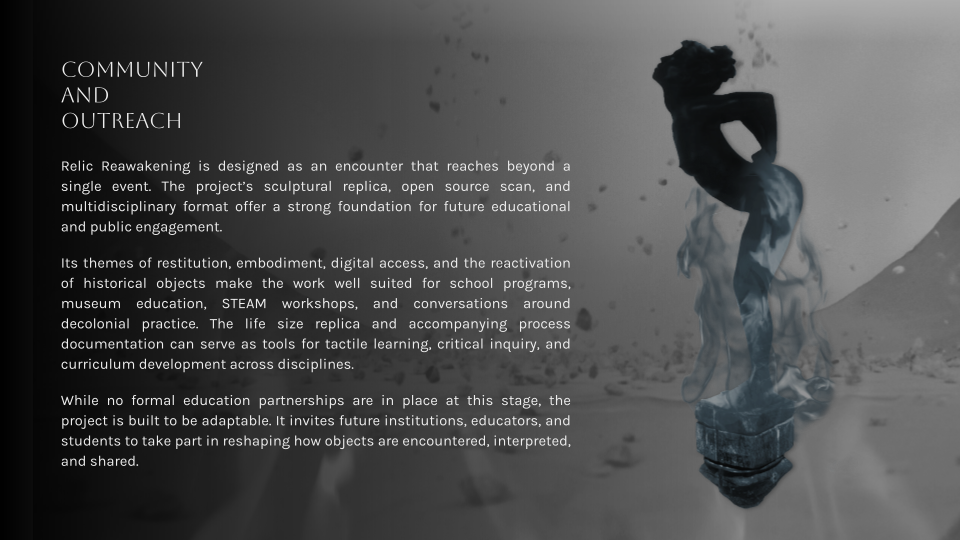
The Bound Nubian figure is central to the project not as metaphor alone, but as an operative image—an object historically believed to hold power through belief, placement, and repetition.
In ancient Egyptian culture, such figures were carved into shoe soles, door handles, and ceremonial objects associated with dominance, where they were understood to actively maintain order (ma’at) by warding off the “other.” The figure was not symbolic; it was meant to work.
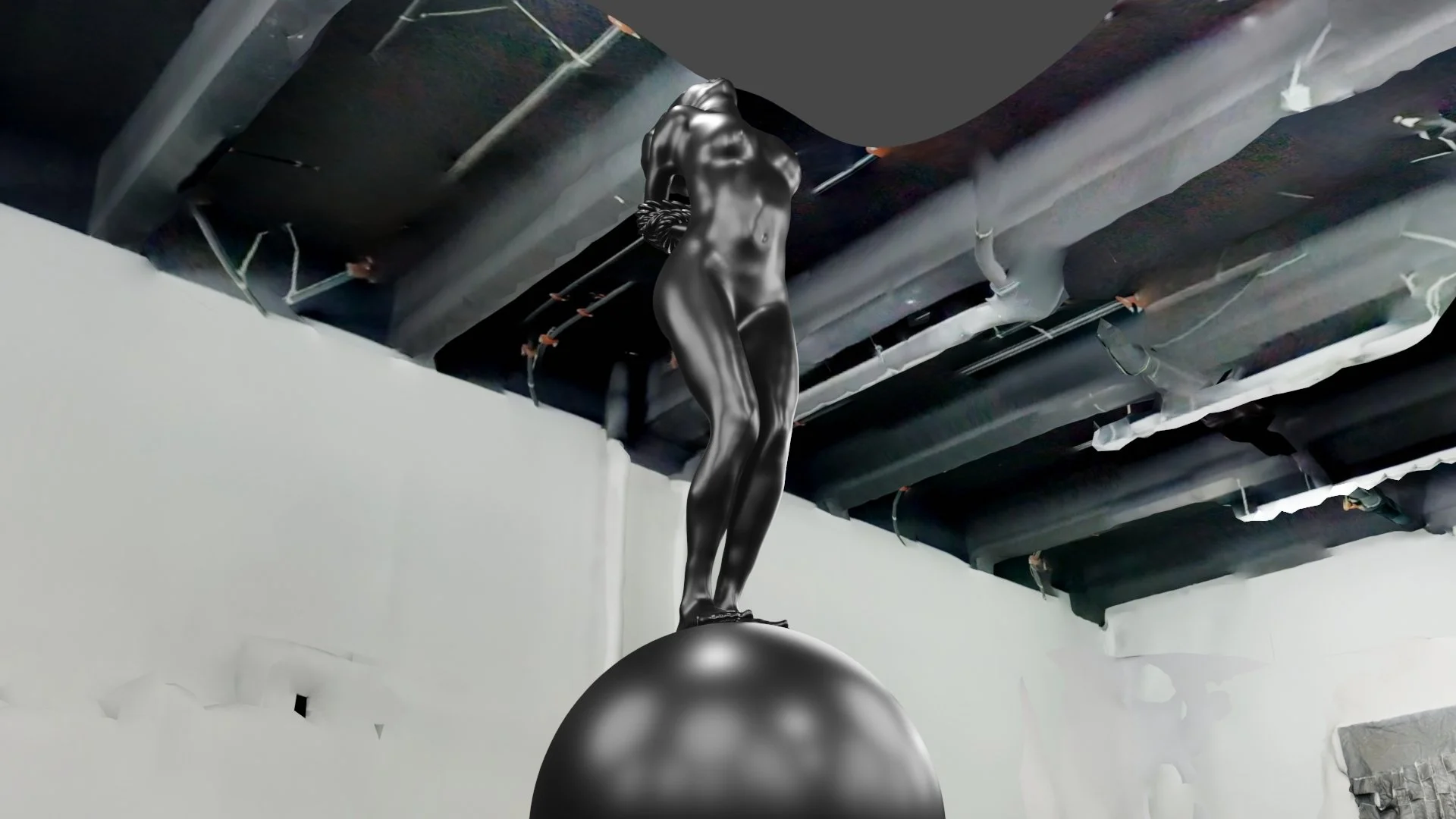
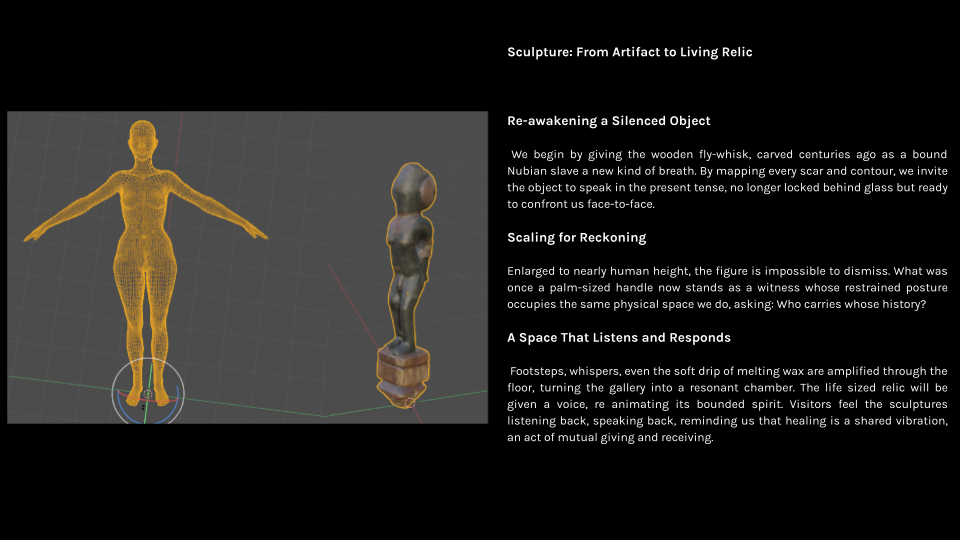
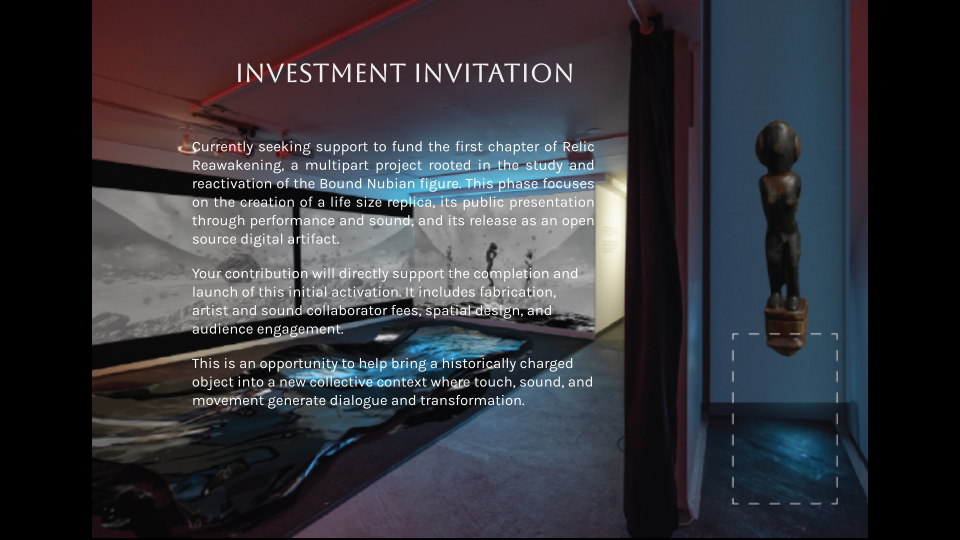
With the support and permission of the Brooklyn Museum, this relic has been digitally scanned in high resolution, allowing it to be studied, reconstructed at a larger scale, and re-entered into circulation through contemporary forms. The project holds a paradox: preservation protects, yet also suspends vitality. The museum vitrine safeguards the object with care and respect, while simultaneously limiting its capacity to enter new sonic, spatial, or relational conditions. This tension—between care and containment, preservation and aliveness—runs through the entire project.
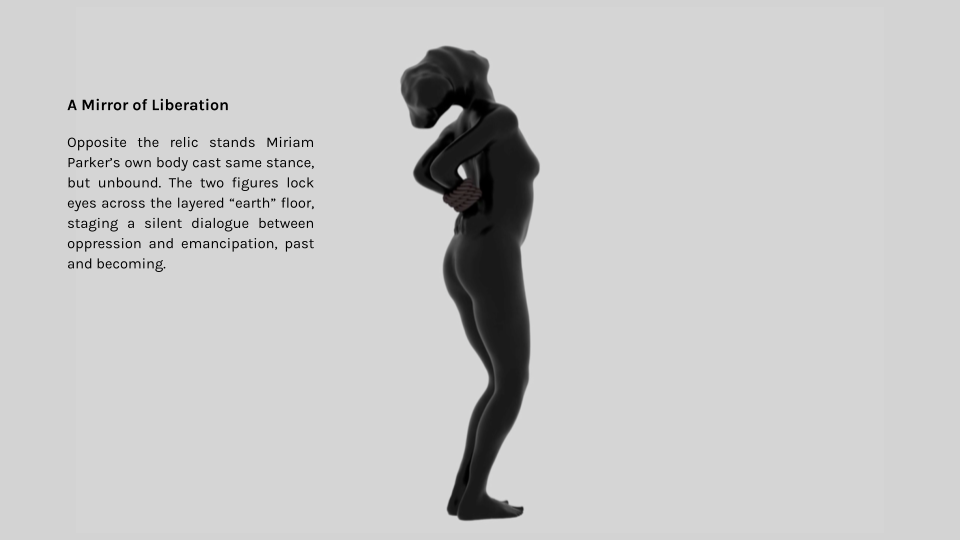
Rather than extracting the relic from history, the work re-enters it. The project explores how images, structures, and belief systems continue to operate in the present: in surveillance culture, immigration policy, racialized othering, class stratification, and the displacement of voice. The re-awakening of the Bound Nubian is not a reversal of history but a re-negotiation of its force.
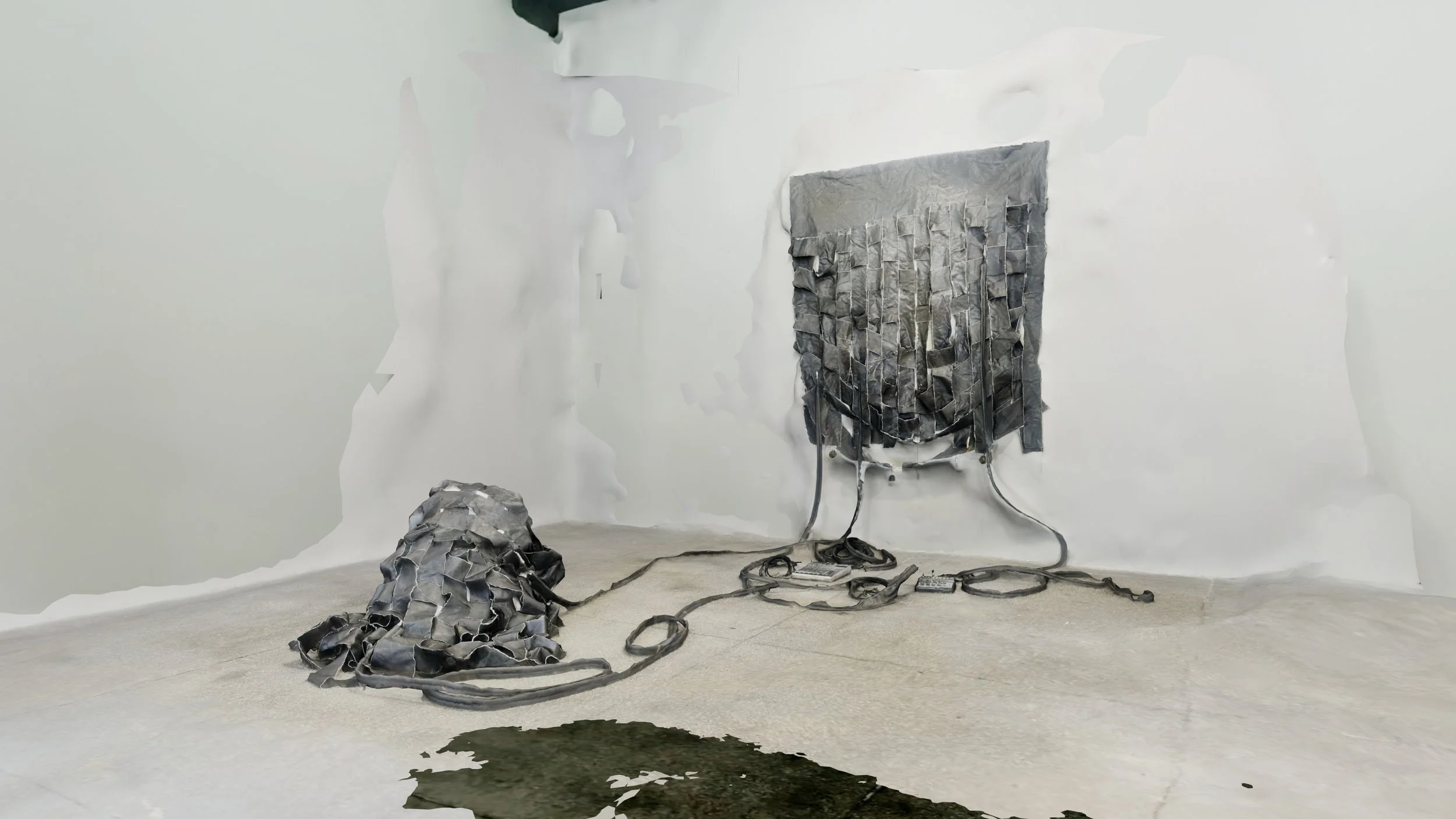
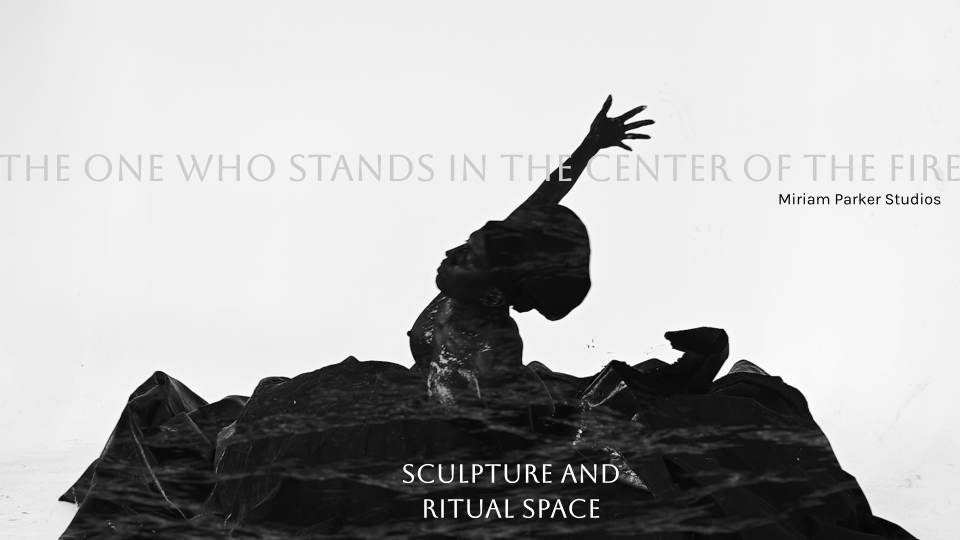
Across film, installation, and performance, the project creates environments that function as sites of encounter rather than instruction. Wisdom is not transmitted as knowledge or doctrine, but approached as something embodied, practiced, and continually rediscovered.
Movement, sound, ritual space, and stillness operate as modalities of inquiry—conditions through which perception might reorganize and attention might shift.
The work remains intentionally unfinished. It evolves through repetition, attention, and engagement with bodies, materials, sound, and space. Each iteration adapts to its context, allowing the project to remain alive rather than resolved.